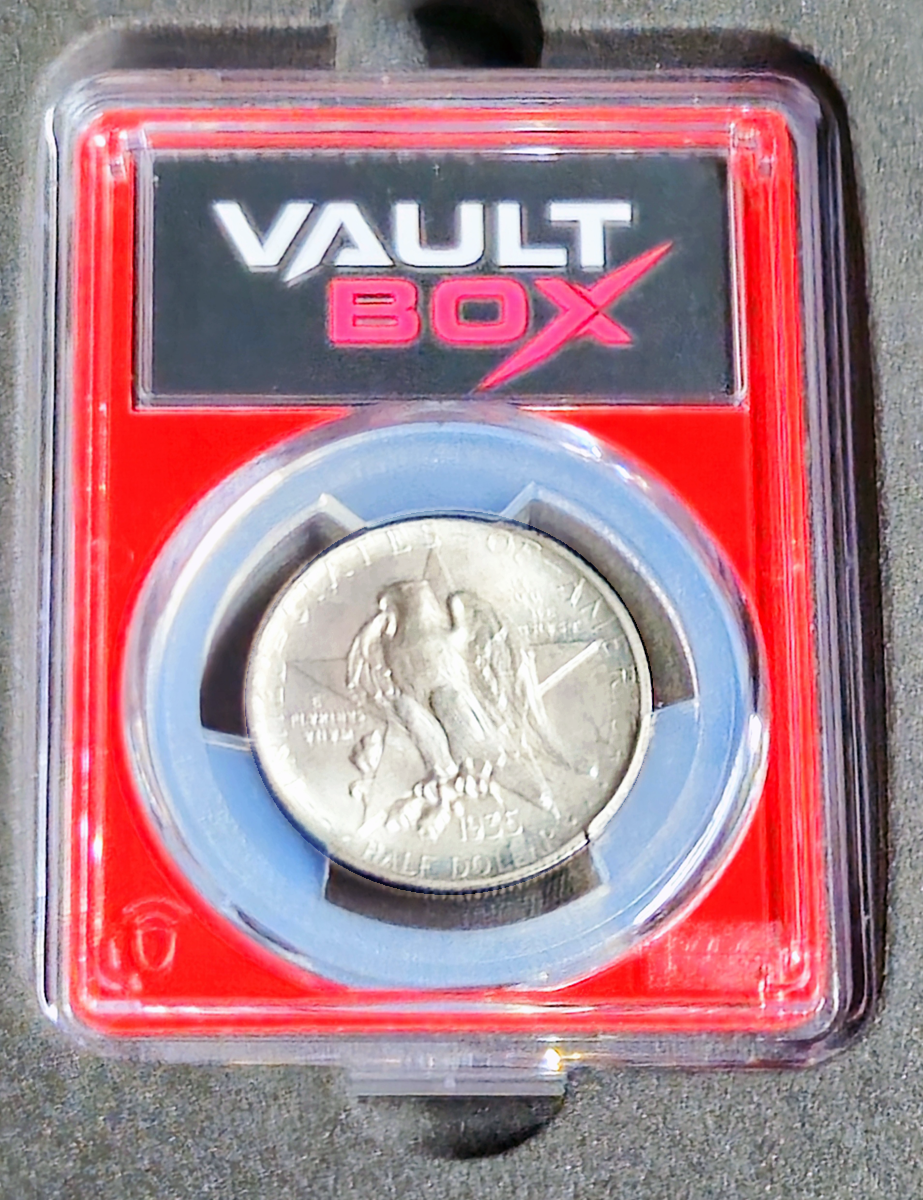
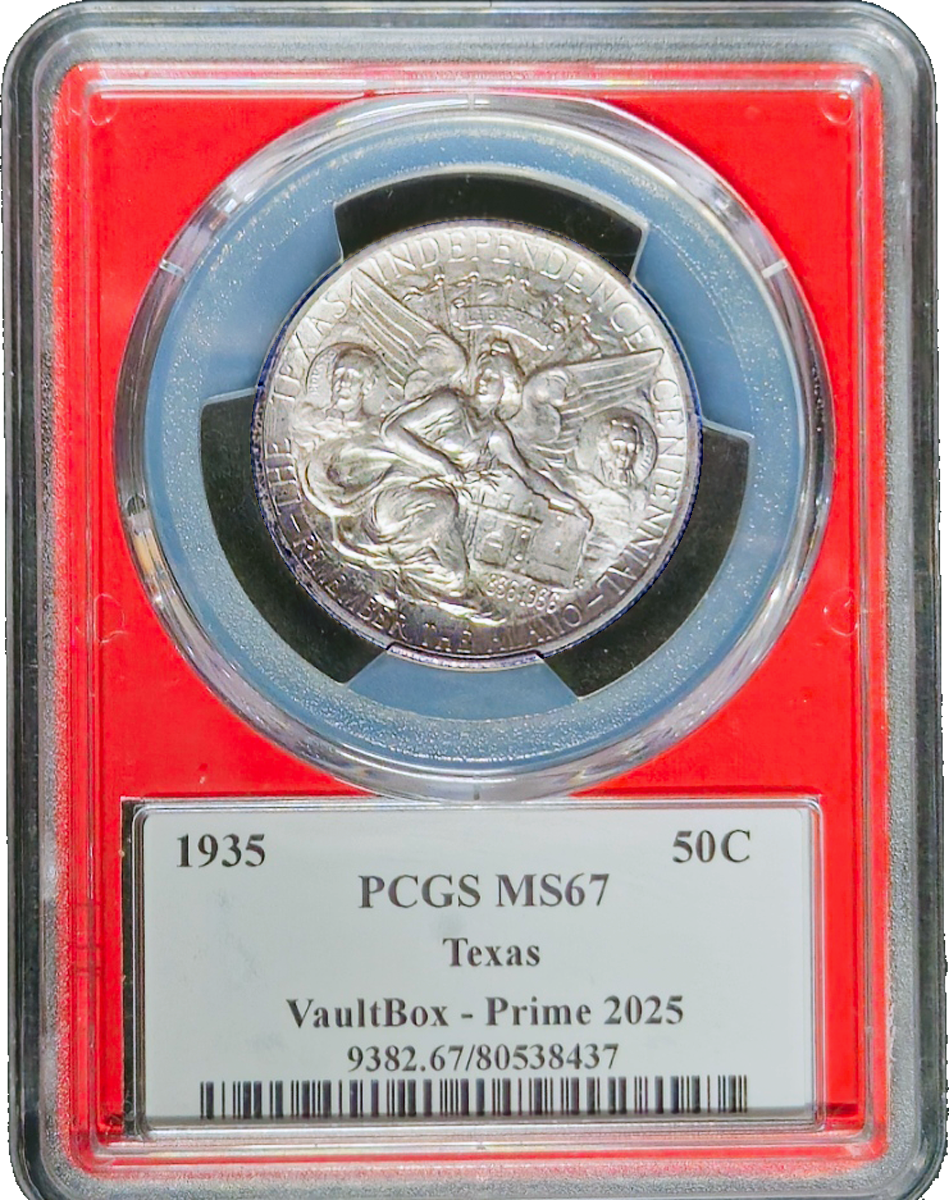
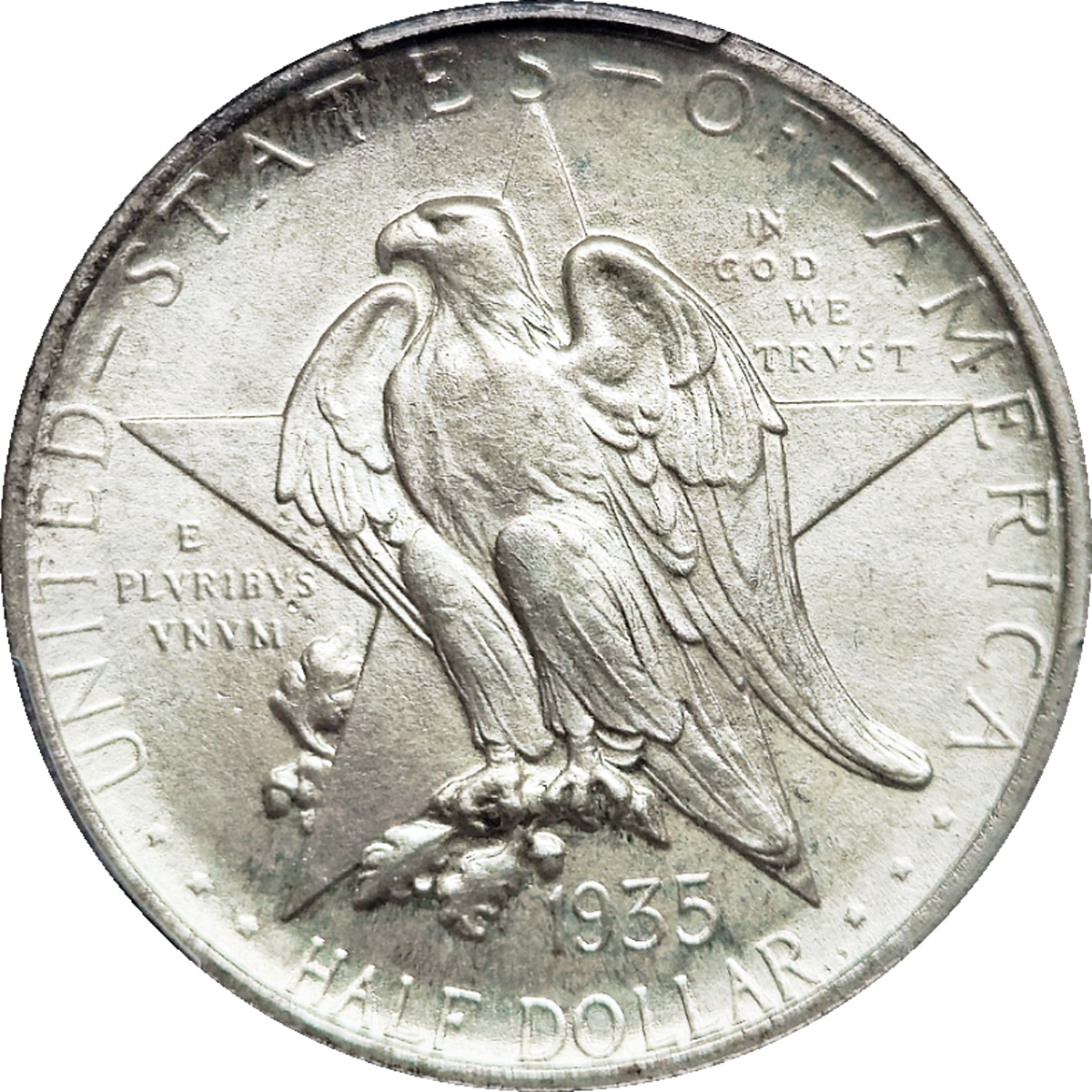
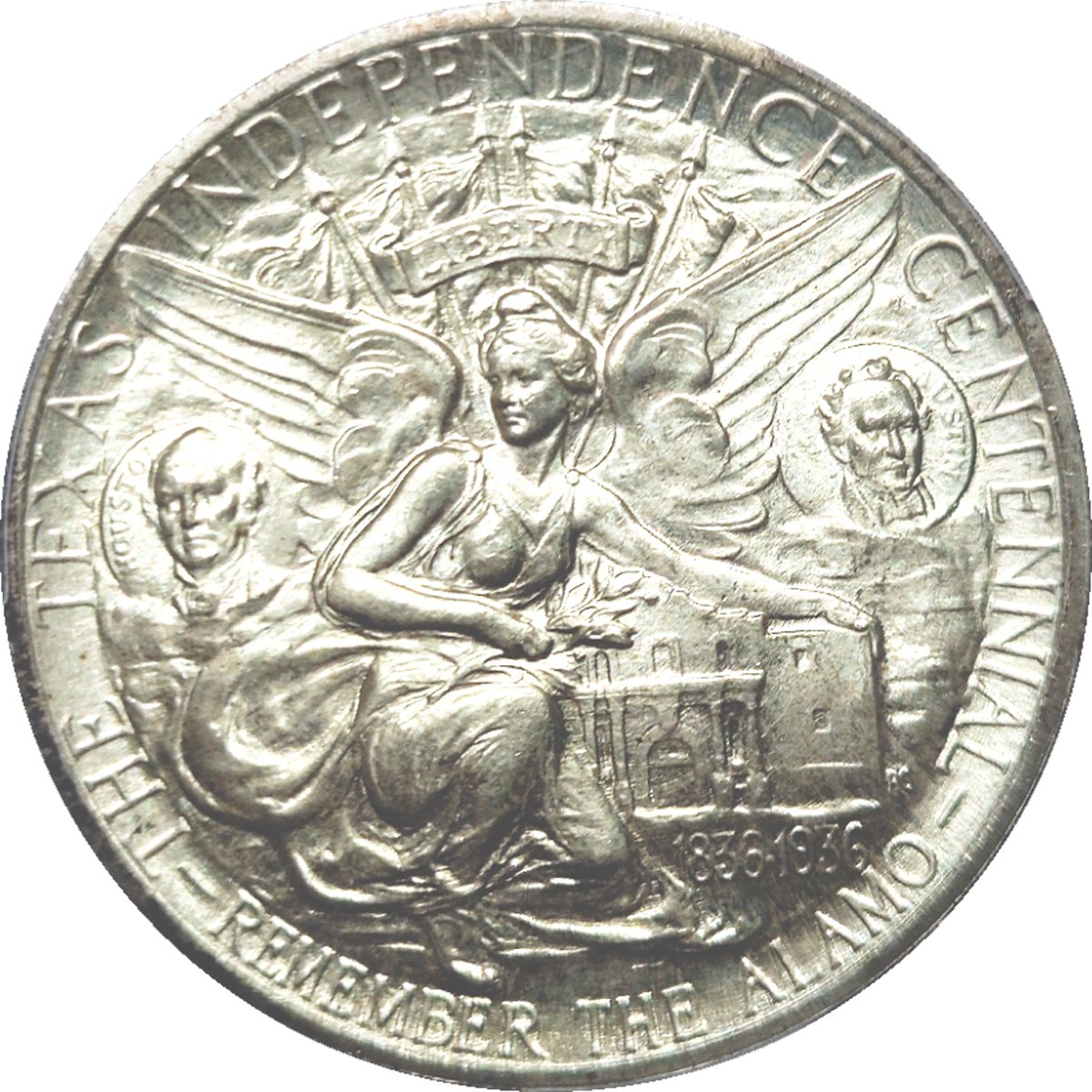

Description
Introduction to the 1935 Texas Commemorative Silver Half Dollar
The 1935 Texas Commemorative Silver Half Dollar holds a special place in the realm of numismatics, representing a significant era in American history. Minted as part of a series of commemorative coins, this half dollar was authorized by the United States Congress to honor the 100th anniversary of Texas’s independence from Mexico. The coin not only pays tribute to a pivotal moment in the state’s history but also reflects the broader themes of independence and state pride that were prevalent during this time.
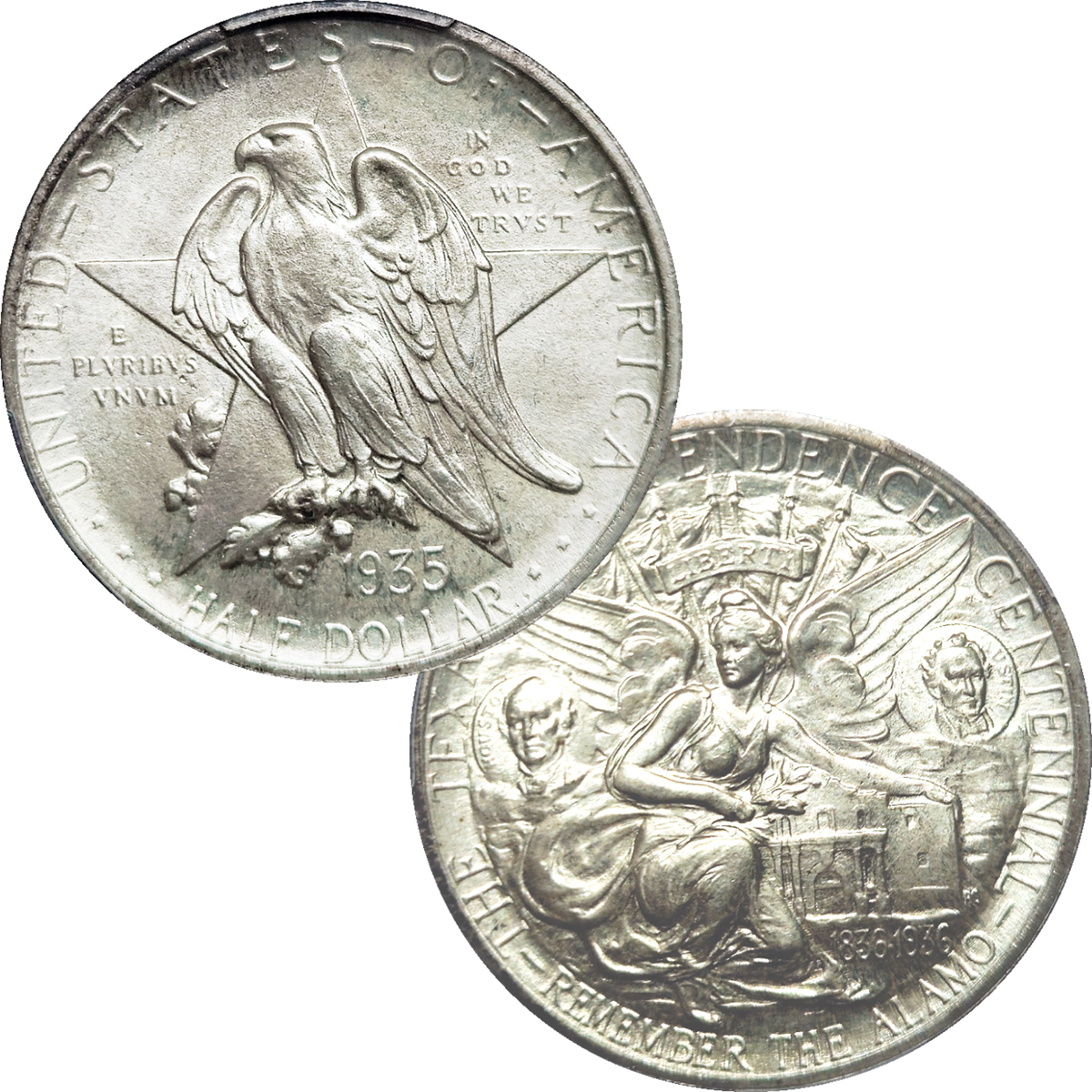
Commemorative coins serve as tangible representations of significant events, individuals, or themes in American culture. The 1935 Texas Commemorative Half Dollar is no exception, encapsulating the spirit of Texas’s rich heritage and its evolution as a state. Each side of the coin features unique designs: one side showcases the iconic depiction of a lone star, synonymous with Texas culture, while the reverse portrays an image of a cowboy, representing the state’s ranching legacy. Such imagery not only elevates the coin’s aesthetic appeal but also ties it closely to the identity of Texas.
The minting of this commemorative half dollar was part of a larger movement during the early 20th century to generate funds for various commemorative projects. Specifically, the proceeds from the sales of the 1935 coin were directed towards the restoration of the San Jacinto battlefield, where the pivotal battle leading to Texas’s independence took place. This dual purpose illustrates how commemorative coins serve both as collectible items and as instruments to foster historical awareness and preservation.
Understanding the context and significance of the 1935 Texas Commemorative Silver Half Dollar enhances its value to collectors and historians alike. Its legacy as a commemorative piece continues to enrich the narrative of Texas and the broader tapestry of American history.
Design Features and Specifications
The 1935 Texas Commemorative Silver Half Dollar showcases a remarkable blend of artistic design and precise technical specifications, making it an important piece in the realm of numismatics. This coin features a unique obverse that represents a variety of Texas landmarks and is an homage to the state’s historical significance. The primary figure on the obverse is a depiction of the state’s iconic longhorn steer. This imagery not only promotes the cultural heritage of Texas but also adds an element of recognition that collectors and enthusiasts cherish. The design was executed by renowned engraver, Paul Vincze, who has been noted for his ability to capture intricate details, thereby enhancing the coin’s overall aesthetic appeal.
On the reverse side, the design features a bold representation of the Texas Lone Star, surrounded by a wreath, embodying the state’s pride and resilience. The inscription around the edge of the coin reads “Texas 1836,” marking the year when Texas declared independence from Mexico, thus emphasizing its historical significance. The balanced composition of the design elements allows the coin to not only capture attention but also evoke a sense of nostalgia among collectors.
In terms of specifications, the 1935 Texas Commemorative Silver Half Dollar is composed of 90% silver and 10% copper, adhering to the standards set for commemorative coins of that era. It has a standard weight of 12.5 grams and a diameter of 30.6 millimeters. These specifications ensure that the coin retains substantial intrinsic value. The high silver content contributes to its allure among coin collectors, as silver tends to appreciate over time. Overall, the unique design features and precise specifications of the 1935 Texas Commemorative Silver Half Dollar greatly enhance its value and significance within the numismatic community.
Grading and Collectibility: Understanding PCGS MS67
The grading of coins is a fundamental aspect of numismatics, and it significantly influences their value and collectibility. One of the prominent grading systems used in the industry is established by the Professional Coin Grading Service (PCGS). A grade of PCGS MS67 denotes a specific level of quality and condition, indicating that the coin is near perfection, with only minimal imperfections visible under magnification.
The numerical grading scale ranges from 1 to 70, with coins rated closer to 70 considered to be of a higher quality. The designation “MS” stands for Mint State, reflecting a coin that has never been circulated, and retains the original luster and details from the minting process. A coin graded as MS67 will exhibit full mint luster and only a few minor contact marks that are imperceptible without magnification, placing it among the upper echelon of collectible coins.
The importance of a coin’s condition cannot be overstated when it comes to determining its market value. In the case of the 1935 Texas Commemorative Silver Half Dollar, its condition often dictates how much collectors are willing to pay. High-grade examples like those graded PCGS MS67 are in demand not only for their beauty but also for their rarity. Coins that receive a high PCGS grade tend to attract seasoned collectors and investors seeking out pieces with the highest desirability.
When evaluating a 1935 Texas Half Dollar, collectors typically inspect various aspects including the coin’s surface, strike quality, and overall aesthetic appeal. The presence of a PCGS MS67 grade can signal to collectors that this particular half dollar is a worthy investment, ensuring both beauty and quality, which enhances its potential for future appreciation. Thorough understanding of the grading system thus plays a crucial role in the decisions made by numismatists wishing to add valuable pieces to their collections.
Market Trends and Investment Potential
The 1935 Texas Commemorative Silver Half Dollar has become increasingly relevant in today’s coin market, reflecting changing trends and evolving collector interests. Recent auction results illustrate a growth in demand among numismatists and investors alike. Coins in prime condition, particularly those graded by professional services, have fetched impressive prices, often exceeding initial estimates. For instance, pieces labeled as MS-67 or higher have been noted to reach values significantly above the standard market price, indicating a robust collector interest.
The heightened enthusiasm for Texas-related memorabilia has played a crucial role in this trend. The state’s rich historical and cultural heritage contributes to the desirability of its commemorative coins. Furthermore, fluctuations in silver prices also impact the valuation of such coins, as they are tied to the intrinsic material worth. It is essential for potential investors to consider both the numismatic and metallic aspects when evaluating the investment potential of the 1935 Texas Commemorative Silver Half Dollar.
Factors influencing the coin’s value include rarity, condition, and provenance. Low mintage figures enhance the coin’s attractiveness, while unique features such as die varieties can create additional demand among advanced collectors. Moreover, as the population of seasoned investors grows, ensuring proper appraisals and acquiring coins from reputable dealers becomes increasingly valuable. This creates a nuanced market where both novice and experienced collectors can find opportunities for growth.