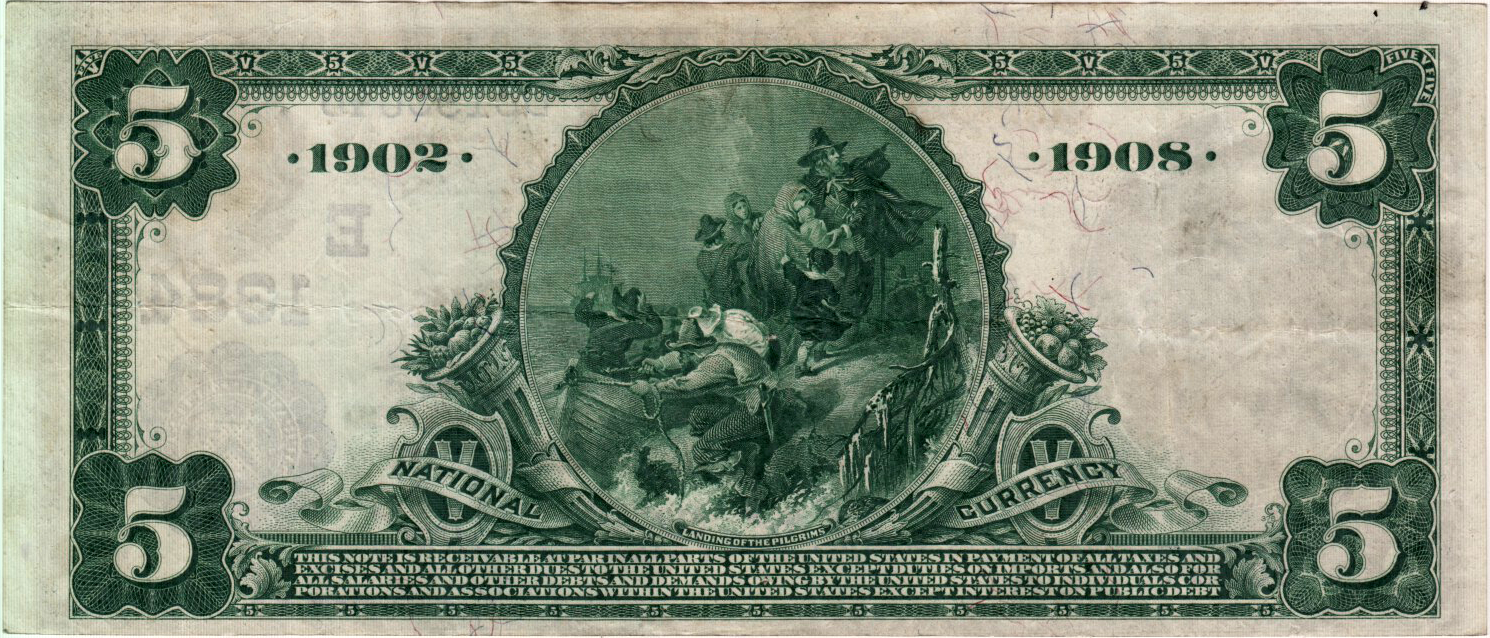

Description
Overview of the Citizens National Bank
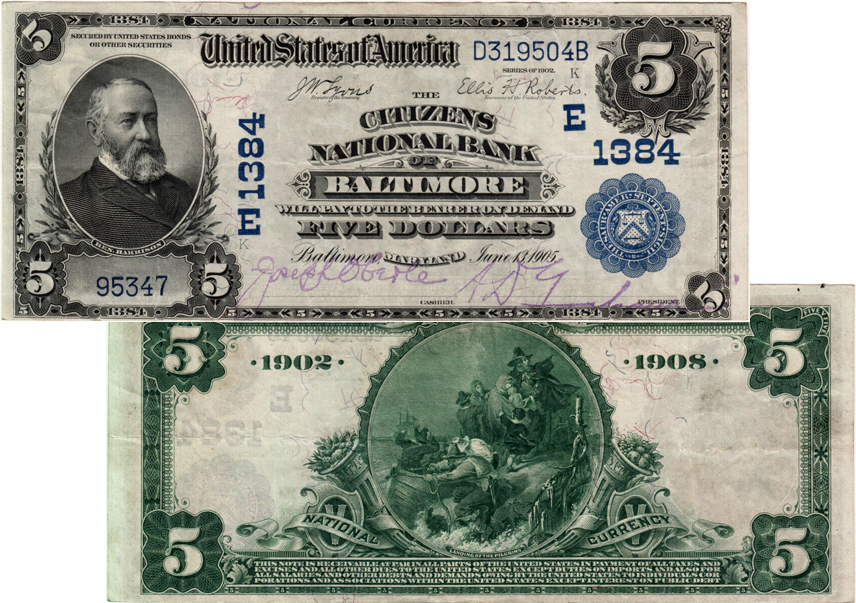
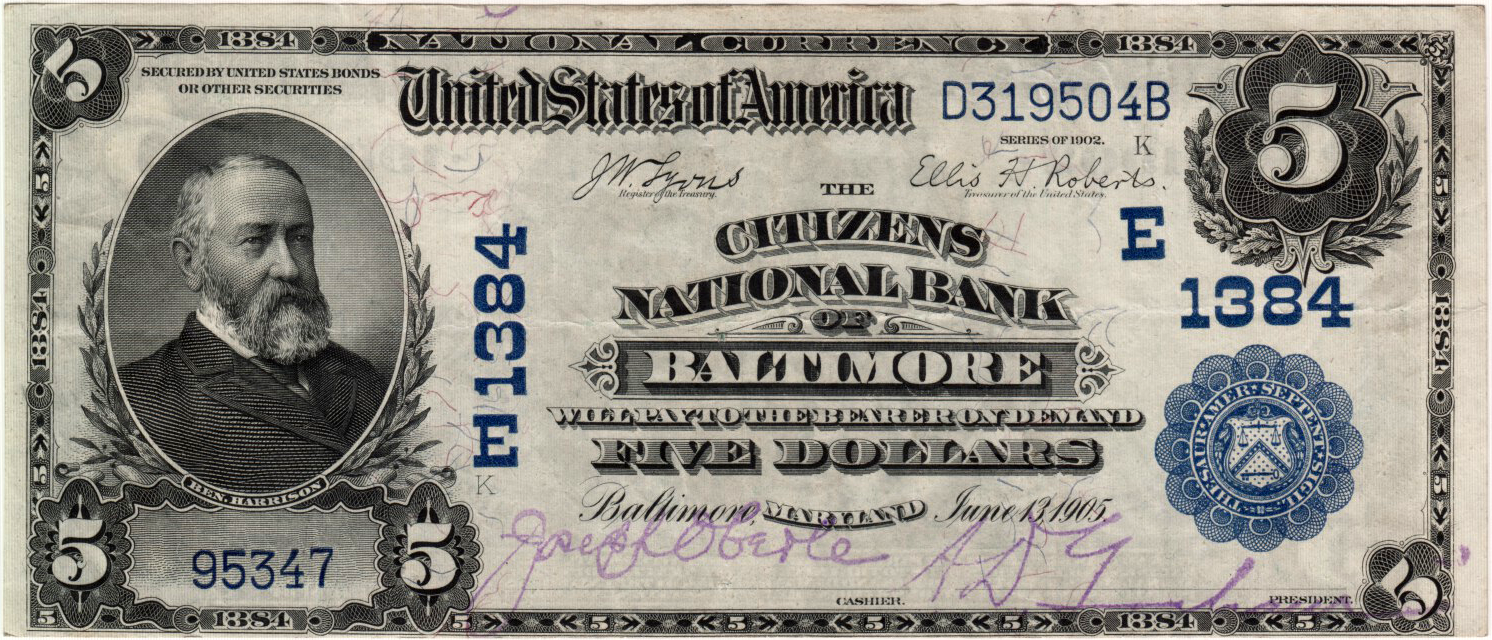
Organized in 1849 under a state charter, the bank became a national bank in 1865 with charter number 1384. It stands as a notable institution in the city’s financial landscape. Its founding marked a significant milestone in the history of banking in Baltimore, reflecting a period of growth and development through the early 20th century. It stood at the intersection of Pratt and Hanover Streets. It issued 21 different types and denominations of national currency beginning 1865 and did not stop until 1935.
The Historical Significance of 1902
The year 1902 holds great importance not only for the Citizens National Bank but also for the overall economic climate of Baltimore. During this time, the city was evolving, with the influx of new industries and a burgeoning population seeking banking services that could support their financial needs. The establishment of the bank in that year was a direct response to these changing dynamics.
A Rare Collector’s Treasure
This bank note is an example from the third charter period. The Congressional Act of April 12, 1902 created the Third Charter Period, the notes of which bear the designation, “Series of 1902.” This type is analogous to the “Dates on back” issue of the Second Charter Period. On the face, the color of the seal was now blue, rather than red; on the back, the dates “1902-1908” were added
at the top in available white space. Notes of this type were issued from 1908 to 1915. Citizens National also printed 183,709 sheets of $5 1902 blue seal national bank notes. This indicates that these $5 blue seal bank notes from this bank are not going to be extremely rare. Ben Harrison is on the front of all 1902 $5 blue seal bank notes.